

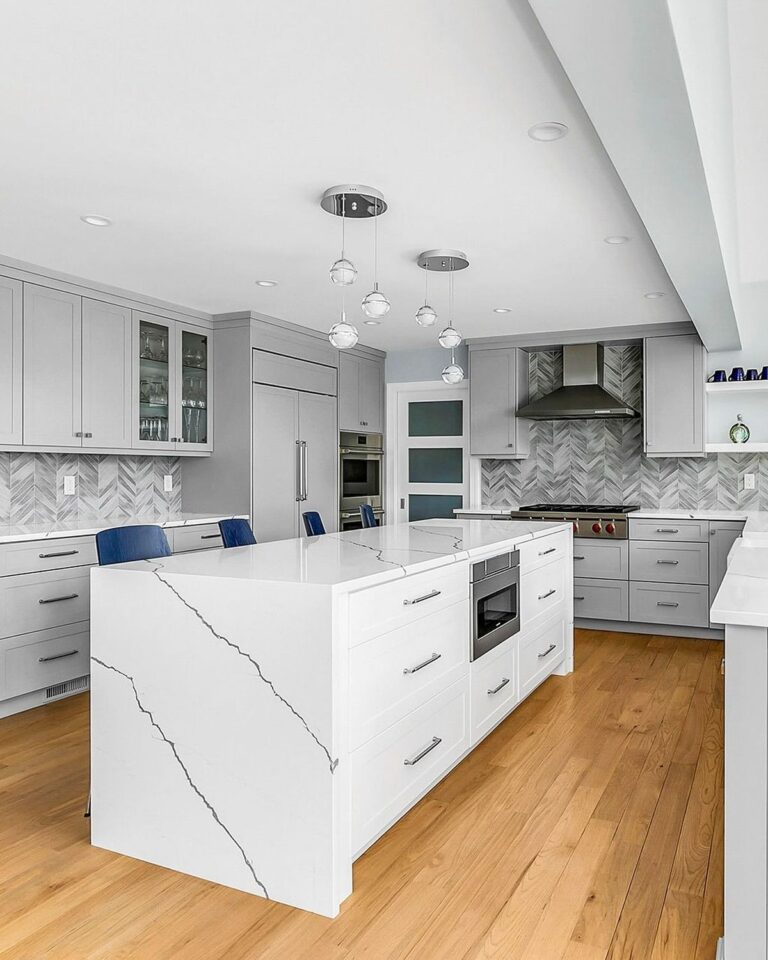

Gray kitchens in 2026 are built with intention. The color is used to define cabinetry, islands, and full walls, creating a clear structure across the entire space.

The shift comes from how gray is applied. Instead of a single flat tone, these kitchens combine light and dark shades, matte and reflective finishes, and materials like wood, stone, and metal that sit alongside it.
The result is a controlled layout where gray holds everything together. It is not added to soften the design. It is used to organize it.
The Soft Gray Cabinet Wall Framing Stainless Steel

This kitchen uses soft gray cabinetry as a calm backdrop for bold stainless steel elements. The refrigerator and range do not feel separate from the design because the surrounding cabinetry frames them with precision, creating a seamless wall.
What stands out is the consistency. The tone of the cabinets, the subtle detailing, and the clean lines allow the metal finishes to stand out without overwhelming the space. It feels structured, not cold.
The Light Gray Kitchen Balanced With Open Wood Shelves

Instead of relying only on cabinetry, this layout introduces open wood shelves that break the uniform gray surface. The shelves bring warmth and give the eye a place to rest, preventing the kitchen from feeling too controlled.
This balance between closed storage and open display creates a more relaxed environment. Everyday objects become part of the design, and the gray cabinetry acts as a neutral frame rather than the main feature.
The Muted Gray Palette Paired With a Warm Wood Island

Here, gray cabinetry stretches across the walls while a wood island anchors the center. The contrast is subtle but effective, shifting the kitchen from a purely neutral space into something with depth and warmth.
The combination works because neither material dominates. The gray tones keep the space cohesive, while the wood introduces variation that makes the kitchen feel lived in rather than staged.
The Full Gray Kitchen With a Clean, Continuous Layout

This design leans into gray completely, using it across cabinetry, island, and surrounding surfaces. Instead of breaking the palette, it builds consistency that makes the kitchen feel unified.
What prevents it from feeling flat is the variation in finishes. Subtle changes in sheen, countertop texture, and flooring keep the space visually active without introducing new colors.
The Statement Island Anchored in Mid-Tone Gray

The island becomes the center of attention by using a deeper gray tone than the surrounding cabinetry. This shift creates a natural focal point without relying on bold color.
Seating, lighting, and proportions reinforce the island’s role. The gray tone grounds the space, giving the kitchen a clear structure that feels intentional from every angle.
The Gray Kitchen Elevated With Layered Lighting

Lighting transforms this gray kitchen into something more dynamic. Pendant lights and under-cabinet illumination highlight textures that would otherwise go unnoticed.
The gray cabinetry becomes a backdrop for light rather than the main feature. This approach adds depth and keeps the space from feeling static, especially in the evening when artificial light takes over.
The Warm Gray and Brass Combination Adding Contrast

Brass fixtures introduce a subtle contrast that changes how gray is perceived. Instead of feeling cool, the cabinetry takes on a warmer tone that feels more inviting.
The pairing works because it is controlled. Brass appears in key areas such as lighting and hardware, allowing it to stand out without disrupting the overall palette.
The Gray Kitchen Softened by Natural Light and Textures

Large windows and reflective surfaces soften the impact of gray cabinetry. Natural light moves across the surfaces, revealing variations in tone that might otherwise go unnoticed.
Textural elements such as tile, stone, and wood prevent the kitchen from feeling too uniform. The result is a space that changes throughout the day without needing additional color.
The Marble-Driven Kitchen Framed by Gray Cabinetry

In this layout, marble becomes the main feature while gray cabinetry provides structure around it. The stone draws attention, but the cabinets ensure the space remains grounded.
This relationship allows the materials to work together instead of competing. The gray tones act as a quiet support system that lets the marble stand out.
The Two-Tone Gray Kitchen Creating Subtle Depth

Using two shades of gray introduces depth without breaking the neutral palette. Upper cabinets remain lighter while the island or lower units shift into a darker tone.
This layered approach adds dimension and helps define different zones within the kitchen. It keeps the design simple while still giving it a sense of movement and structure.
The Gray Kitchen Warmed by a Wood Range Hood

This kitchen introduces a wood range hood as a focal point against a backdrop of gray cabinetry. The contrast is immediate, but it does not feel forced. The wood brings depth while the gray keeps everything structured and calm.
The balance works because the materials are clearly defined. Gray handles the framework of the kitchen, while the wood element adds character in a controlled way. It feels layered without becoming busy.
The Soft Greige Kitchen With Subtle Texture Layers

This space moves away from cooler gray tones and leans into greige, creating a softer and more relaxed atmosphere. The cabinetry blends into the walls, allowing textures like tile and decor to stand out.
The result feels quiet but not flat. Small variations in surface finishes and tones create depth, giving the kitchen a more natural and lived-in look without introducing bold contrast.
The Deep Gray Cabinets Paired With Brass and Mesh Details

Darker gray cabinetry adds weight and presence, while brass hardware introduces contrast that feels refined rather than decorative. The mesh cabinet inserts bring another layer, adding texture without changing the palette.
This combination creates a kitchen that feels more tailored. The gray becomes richer, and the metallic accents highlight details that would otherwise blend into the background.
The Light Gray Kitchen Keeping Everything Airy and Open

Lighter gray cabinetry paired with white surfaces creates a kitchen that feels open and bright. Nothing interrupts the flow, and the layout reads as one continuous space.
What stands out is how clean the transitions are. Gray softens the starkness of white while still maintaining a light atmosphere, making the kitchen feel larger than it actually is.
The Balanced Gray Island Anchoring a Neutral Space

This kitchen uses a gray island to define the center of the space while surrounding cabinetry stays lighter. The contrast is subtle but enough to create a clear focal point.
Seating, lighting, and cabinetry all align around the island, giving the space structure. The gray tone grounds the kitchen without making it feel heavy.
The Gray Kitchen Framed by Strong Black Accents

Black pendant lights and fixtures introduce contrast that sharpens the overall design. Against gray cabinetry, these darker elements create definition and bring a more modern edge.
The combination works because it is consistent. Black appears in key areas, guiding the eye across the space while gray keeps the background cohesive.
The Classic Gray Kitchen Elevated With Wood and Symmetry

This layout uses symmetry to organize the kitchen, with gray cabinetry forming a structured frame around the space. Wood elements in the island and flooring add warmth that prevents the design from feeling rigid.
The mix of materials feels intentional. Gray sets the tone, while wood introduces variation that makes the kitchen feel balanced and complete.
The Minimalist Gray Wall With Integrated Lighting

Flat-panel gray cabinetry stretches across the wall, creating a clean and uninterrupted surface. Integrated lighting beneath the cabinets highlights the work area without adding visual clutter.
This approach reduces everything to its essentials. The gray tone becomes the main visual element, supported by light and simple materials that keep the design focused.
The Compact Gray Kitchen Mixing Cabinets and Open Shelves

Here, gray cabinetry is paired with small sections of open shelving, breaking the wall into lighter segments. The shelves introduce variation while keeping the overall structure intact.
This mix makes the kitchen feel more flexible. Closed storage handles the bulk of items, while open sections bring in personality without overwhelming the space.
The Mid-Tone Gray Kitchen Balanced With Crisp White Surfaces

Mid-tone gray cabinetry sits between light and dark, creating a neutral base that works with both white countertops and darker accents. The balance feels natural and easy to maintain.
What makes this setup effective is its versatility. The gray does not dominate, but it holds everything together, allowing small details to shift the overall feel of the space without needing major changes.