


Want a kitchen that feels calmer and brighter without tearing out solid wood cabinets? This remodel shared by Reddit user u/SourSurt transformed an older oak kitchen using sage paint, glossy tile, quartz counters, and surface updates that changed the atmosphere of the room.
Instead of replacing the entire kitchen, the remodel focused on changing how the space reflected light and how the surfaces connected. The result feels softer, cleaner, and more cohesive even though the layout stayed almost the same.

The Original Oak Cabinets Made the Kitchen Feel Heavy
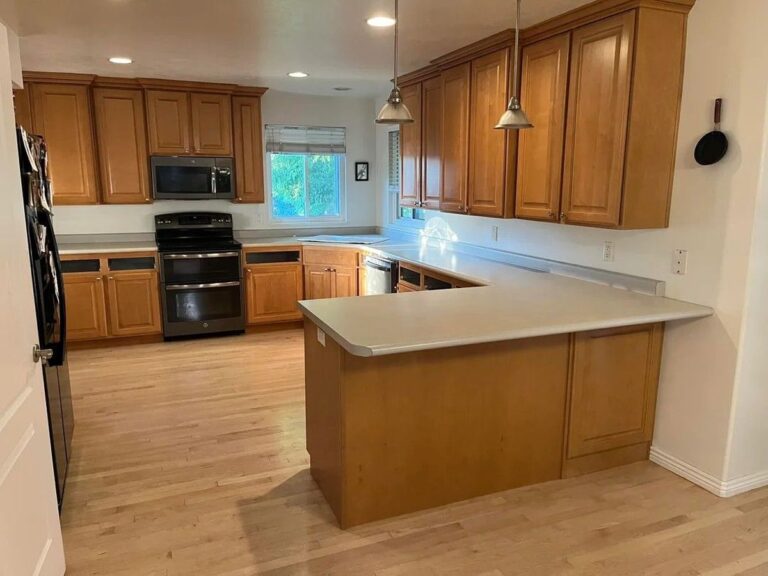
The kitchen already had a functional layout with large amounts of storage and uninterrupted counter space. But the orange-toned oak cabinets dominated nearly every surface in the room.
Rounded laminate counters, beige walls, and darker wood finishes absorbed much of the natural light instead of pushing it across the kitchen. The upper cabinet walls also created a continuous block of wood that made the room feel dense around the windows and cooking area.
The layout worked, but the atmosphere felt dated and builder-grade.

The Sage Paint Became the Biggest Visual Shift
Instead of replacing the cabinetry, the remodel introduced a muted sage paint from Sherwin Williams across the original oak cabinet walls.
That single change softened the orange undertones that defined the kitchen before the renovation. The lighter color reduced the visual weight of the cabinets and helped the room feel calmer without removing the original structure of the space.
Because the sage tone stays muted instead of saturated, the cabinets blend into the walls, backsplash, and surrounding surfaces instead of standing apart as separate blocks of wood.
The result feels more connected from wall to wall even though the cabinet layout stayed the same.

The Glossy Tile Changed the Entire Back Wall
One of the strongest upgrades came from the backsplash.
Instead of leaving painted gaps between the counters and upper cabinets, the remodel added glossy sage-green tile that wraps across the kitchen walls and around the windows.
That continuous surface helps the kitchen feel more custom-built instead of broken into smaller sections. The reflective finish also pushes more natural light back across the room, helping brighten corners that once felt darker and flatter.
Because the tile extends behind the windows and range area, the backsplash acts more like an architectural surface instead of a narrow accent strip above the counters.

The Quartz Counters Removed the Rounded Builder-Grade Edges
Before the remodel, the kitchen used laminate countertops with curved edges and visible seams common in many early-2000s kitchens.
The new quartz counters changed the visual sharpness of the room. Cleaner square edges, brighter surfaces, and lighter tones created a smoother transition between the cabinetry and backsplash.
The undermount sink also simplified the counter surface and reduced the visual clutter created by the older overmount sink.
Together, the counters and backsplash pushed the kitchen away from the heavy brown-and-beige palette that defined the original space.

The Layout Stayed Functional Instead of Trend-Driven
One reason the remodel works is because the original kitchen layout stayed almost untouched.
Instead of removing cabinetry for open shelving or forcing a large island into the room, the renovation focused on changing surfaces, color, and reflection while preserving the workflow that already worked.
The G-shaped layout still provides large amounts of prep space, storage, and separation between the cooking and walking areas without making the kitchen feel closed off.
The remodel changed the atmosphere of the kitchen far more than the structure itself.

The Kitchen Feels Softer Without Losing Warmth
Even with the lighter palette, the kitchen still keeps warmth through the wood flooring, natural light, and muted sage tones across the cabinetry and tile.
The result does not feel stark or overdesigned. Instead, the renovation softened the visual weight of the original kitchen while keeping the room feeling lived in and functional day to day.
The transformation did not come from removing everything. It came from changing how the kitchen handled color, texture, reflection, and visual continuity.
All credits go to Reddit user u/SourSurt.