



Kitchen faucets have become one of the most noticeable design choices in modern kitchens. Instead of blending into the background, many of today’s faucets help define the style of the entire sink area through finish, shape, placement, and functionality.

Designers are moving beyond standard chrome fixtures and introducing brushed gold, matte black, stainless steel, wall-mounted models, commercial-inspired pull-down designs, bridge faucets, and minimalist architectural forms. In many kitchens, the faucet now serves as a visual anchor that connects cabinetry, countertops, hardware, and lighting.
These examples show how different faucet styles influence the appearance and function of a kitchen. From statement pieces positioned beneath large windows to streamlined fixtures integrated into contemporary workstations, each design highlights a different approach to one of the hardest-working features in the room.
Farmhouse Sink Paired With an Unlacquered Brass Faucet

The oversized apron-front sink dominates this workstation. Its thick stone appearance projects beyond the cabinet face, creating a focal point between the wood cabinetry and dark countertop.
The brass faucet introduces contrast without competing with the sink. Matching brass rails mounted across the cabinet fronts repeat the finish below, creating a connection between the plumbing fixture and surrounding hardware.
Apron Sink Uses Matching Countertop Material

Rather than contrasting with the countertop, this apron-front sink uses the same surface material and color. The result is a continuous work area where the sink becomes part of the counter composition rather than a separate insert.
The copper-toned faucet draws attention toward the center of the sink wall. Combined with paneled cabinetry and textured fronts, the faucet acts as one of the strongest accent elements in the kitchen.
Commercial-Style Faucet Adds Professional Details

This faucet borrows details from commercial kitchen equipment through its articulated arm, exposed mechanical joints, and flexible spray hose. The design places function on display rather than concealing moving parts.
The black hose creates contrast against the polished metal body while introducing a different silhouette from standard gooseneck faucets. It becomes the main visual feature above the sink instead of blending into the background.
Prep Sink Fits Into a Dedicated Beverage Station

Small prep sinks continue appearing in beverage stations, coffee bars, and entertainment areas where a full kitchen sink would consume unnecessary counter space. The compact round basin provides enough room for rinsing glasses, filling pitchers, and preparing drinks.
The bridge-style faucet reinforces the traditional appearance of the station. Paired with stone-look counters and a tile backsplash, the faucet becomes part of a dedicated serving area rather than a standard cleanup zone.
Compact Faucet Maximizes a Small Utility Sink

This narrow sink occupies only a small section of cabinetry but still supports daily tasks such as filling coffee machines, washing cups, and preparing drinks. The compact faucet scale matches the dimensions of the workstation.
White cabinetry, subway tile, and stainless appliances create a clean backdrop that allows the faucet to stand out. In spaces where every inch matters, smaller fixtures often create a better balance than oversized commercial-style models.
Wall-Mounted Faucet Frees Countertop Space

Instead of mounting through the countertop, this faucet projects from the backsplash wall. The arrangement leaves the surrounding surface uninterrupted and simplifies cleaning around the sink opening.
The polished finish reflects the blue-tinted glass backsplash, helping the faucet remain visible despite the minimalist surroundings. Wall-mounted configurations continue appearing in kitchens where clean horizontal lines take priority.
Undermount Sink Disappears Into the Countertop

The sink installation takes a secondary role here. An undermount basin sits beneath the quartz surface, eliminating the visible rim and allowing crumbs or water to move directly into the sink.
Because the sink remains understated, the square-profile faucet becomes the primary feature. The combination supports the minimalist cabinetry and uninterrupted countertop lines throughout the kitchen.
Dark Sink Creates Contrast Against White Surfaces

Black sink basins have become more common in contemporary kitchens where designers want contrast without introducing additional colors. The dark sink opening stands out against the pale countertop and cabinetry.
A brushed stainless pull-down faucet complements the darker basin while maintaining a simple silhouette. Together, the two fixtures create a distinct work zone within an otherwise monochromatic kitchen.
Integrated Sink Maintains Continuous Work Surfaces

The stainless sink blends into the surrounding countertop through matching tones and crisp rectangular geometry. Large basin dimensions provide enough room for oversized cookware while maintaining a streamlined appearance.
The faucet adopts a low-profile shape that keeps attention on the counter and storage wall rather than the plumbing fixture itself. This approach works particularly well in long galley kitchens where uninterrupted surfaces become part of the design.
Double Basin Layout Supports Separate Tasks

Dual sink bowls provide separate spaces for rinsing, washing, soaking, or food preparation. The arrangement remains popular among homeowners who prefer dedicated zones instead of one large basin.
The high-arc pull-down faucet reaches both bowls without requiring a second fixture. Combined with the rail system mounted along the backsplash, the sink area functions as a compact preparation station with tools, dishes, and utensils within easy reach.
Integrated Sink Disappears Into the Island Surface

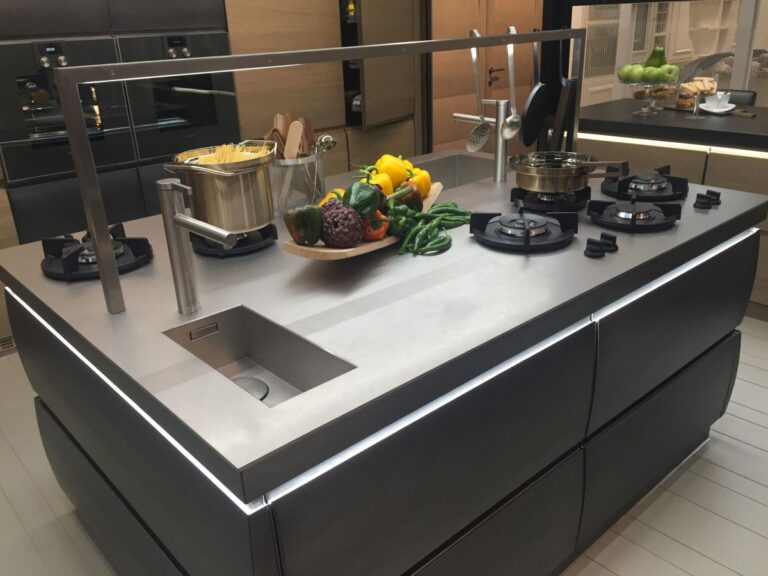
This kitchen island combines cooking, prep, and cleanup functions in a single slab. The sink opening sits flush within the countertop and occupies very little visual space despite being positioned at the center of the island.
The faucet follows the same approach. Its low-profile stainless design avoids blocking sightlines across the island while maintaining access to the sink. This type of integrated layout continues to appear in luxury kitchens where appliances, sinks, and storage blend into one continuous work surface.
Square Sink Creates a Dedicated Prep Zone

The rectangular sink sits beneath uninterrupted marble-look counters that provide a large preparation area on both sides. The sharp corners of the basin mirror the straight lines of the faucet and cabinetry.
Under-cabinet lighting highlights the sink wall while the dark wood countertop section creates a secondary workspace nearby. The faucet becomes part of a compact preparation station rather than the dominant visual feature.
Floral Sink Skirt Replaces Cabinet Doors

This sink area combines traditional cabinetry with a decorative fabric skirt beneath the basin. Instead of hiding plumbing behind doors, the floral textile introduces pattern and color directly into the sink wall.
A bridge-style faucet reinforces the classic appearance. Open shelving above displays dishes and accessories, turning the sink area into a focal point rather than a purely functional work zone.
Gold Faucet Creates Contrast Against White Surfaces

The gold faucet immediately draws attention within this bright corner sink arrangement. Positioned beneath a bay window, the fixture becomes the visual center between the white countertop, white sink, and surrounding trim.
Large windows introduce natural light throughout the day, allowing the metallic finish to stand out from different angles. The combination demonstrates why gold fixtures continue replacing standard chrome in many kitchen renovations.
Stainless Workstation Uses Integrated Accessories

Everything in this sink area shares the same stainless finish, from the countertop and backsplash to the basin and faucet. The result resembles a professional kitchen workstation rather than a residential sink cabinet.
Integrated accessories sit behind the main basin, including drainage channels and preparation compartments. The faucet maintains a restrained profile because the sink system itself becomes the primary feature.
Matte Black Faucet Anchors a Dark Countertop

Dark stone counters and backsplash panels create a dramatic backdrop for this sink installation. The matte black faucet extends the darker palette rather than introducing contrast through a metallic finish.
The stainless basin provides the only reflective surface in the composition. This combination works well in kitchens where homeowners want the faucet to support the design rather than stand out from it.
Rounded Double Basin Offers Separate Work Areas

Unlike today’s sharp rectangular sinks, this design uses two round bowls connected within a sculpted countertop opening. The curved shapes soften the appearance of the entire work area.
Separate basins allow washing and rinsing tasks to occur simultaneously. The simple faucet design keeps attention on the unusual sink configuration and integrated countertop detailing.
Window Sink Uses an Oversized Gooseneck Faucet

The high-arc faucet becomes a sculptural element against the large window wall. Its height allows oversized pots and serving pieces to fit beneath the spout without difficulty.
Dark blue cabinetry contrasts with the bright countertop and outdoor view beyond the glass. The sink placement takes advantage of natural light while turning cleanup tasks toward the landscape rather than a backsplash wall.
Cross Handles Add Traditional Detail

Many contemporary faucets rely on single-lever controls, but this design returns to separate cross handles. The arrangement introduces a traditional detail while maintaining a modern polished finish.
The gold finish reflects surrounding lighting and complements the stainless sink. Positioned against a minimalist backsplash, the faucet becomes one of the strongest decorative elements in the composition.
Wall-Mounted Faucet Frees Countertop Space

The faucet emerges directly from the backsplash instead of the countertop. Removing deck-mounted hardware creates a cleaner work surface and leaves more usable space around the sink.
Open shelving integrated into the backsplash wall extends storage directly above the basin. Together, the shelf and wall-mounted faucet create a highly functional preparation area with minimal visual clutter.
Ice Bin Shares Space With the Main Sink

This island incorporates two separate recessed compartments. One functions as a traditional sink while the second serves as a beverage station filled with ice for drinks, fruit, or entertaining.
The arrangement allows food preparation and serving activities to occur simultaneously. During gatherings, the secondary basin becomes a built-in cooler without occupying additional counter space.
Rounded Countertop Edges Soften the Sink Area

Most contemporary kitchens emphasize sharp angles, but this design introduces rounded countertop corners and flowing transitions around the sink. The softer geometry creates a different visual rhythm across the work surface.
The compact faucet follows the same philosophy through its curved spout and simplified form. Together, the sink and countertop create a sculptural appearance that differs from the rectangular layouts seen in most modern kitchens.