



Most kitchen islands no longer stop at food preparation. Across these designs, countertops stretch outward, drop to dining height, curve into seating zones, or connect to dedicated table surfaces that create places for meals, coffee, homework, and conversation.

Instead of placing a separate dining table somewhere else in the room, these kitchens build seating directly into the island composition. Wood slabs, stone extensions, cantilevered tops, peninsula-style additions, and sculptural supports turn one feature into a workstation, serving area, and dining space at the same time.
Some extensions add room for two stools, while others create full dining surfaces large enough for family meals. Together, these examples show how designers are using island extensions to increase seating, improve circulation, and make better use of kitchen floor space without sacrificing preparation areas.
Floating Glass Support Replaces a Traditional Table Base

Oak-look tabletop projects from the island and creates a dedicated dining surface without introducing a separate table into the room. A transparent glass panel supports one side, allowing the extension to appear almost suspended above the floor while keeping sightlines open.
Floral graphics applied to the island front contrast with the restrained tabletop, turning the dining area into a focal point rather than an afterthought. Placement allows seated guests to remain connected to kitchen activity without occupying the main preparation zone.
Rounded Corners Create Seating From Every Direction

Terracotta-colored extension abandons the straight rectangular format found in most kitchen tables. Rounded corners and softened edges allow chairs to slide into multiple positions, making the surface usable from all sides.
Connection point aligns directly with the island, creating a single continuous volume rather than two separate pieces. Shape encourages face-to-face seating arrangements and reduces visual bulk inside the compact kitchen footprint.
Dining Height Extension Replaces a Separate Breakfast Room

Large walnut surface extends beyond the island and provides enough depth for full dining chairs rather than bar stools. Black steel legs support the outer edge while maintaining a slim profile that keeps attention on the wood grain.
Positioning creates a transition between cooking space and living space. Open shelving, integrated appliances, and the dining extension operate as one continuous furniture composition rather than individual kitchen elements.
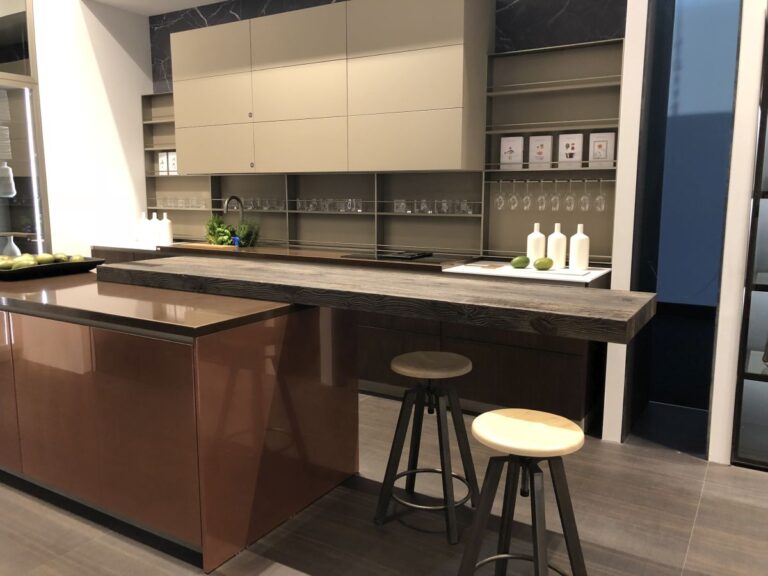
Thick Timber Slab Anchors the Seating Area

Substantial wood slab projects from the island and immediately establishes a gathering zone within the kitchen. Thickness and visible grain introduce furniture-like character that contrasts with the glossy cabinetry beneath.
Bar stools tuck beneath the overhang without interfering with storage access. Seating remains close enough for conversation during meal preparation while preserving clear circulation around the perimeter.
Curved Ends Remove the Formal Dining Table Look

Dark walnut extension abandons hard corners in favor of rounded ends and flowing lines. Shape softens the visual impact of the large island while creating a more relaxed place for eating and conversation.
Pedestal support integrates directly into the cabinetry, allowing chairs and stools to move freely around the perimeter. Arrangement functions as both a dining table and an extension of the work surface.
Long Counter Creates Space for Multiple Activities

Extended wood countertop stretches across the front of the island and provides room for dining, serving, and casual work. Length allows several people to use the surface at the same time without competing for space.
Black stone worktops behind the extension contain cooking and preparation functions while the wood surface remains dedicated to seating. Material contrast helps define each zone without requiring physical separation.
Oval Surface Softens a Minimalist Kitchen

Large oval tabletop extends from a dark island and introduces a shape rarely seen in kitchen layouts. Absence of corners creates a smoother path around the room and reduces the visual weight of the extension.
Thin metal supports keep the structure light while allowing the tabletop to appear almost detached from the island. Shape encourages flexible seating arrangements rather than assigning fixed positions.
Stone Inlay Creates a Dining Destination

Walnut extension incorporates a circular stone insert positioned at the center of the dining surface. Material change draws attention to the seating area and creates a visual connection with the stone used elsewhere in the kitchen.
Rounded outline contrasts with the linear cabinetry and long island behind it. Dining extension feels intentional rather than added later, functioning as an integrated design feature.
Raised Platform Separates Dining From Prep Space

Secondary walnut surface sits above the main stone island and establishes a dedicated eating area without increasing the overall footprint. Elevation change creates a clear distinction between cooking and dining functions.
Open shelves beneath the raised platform add storage while reinforcing the layered design. Arrangement allows meal preparation and dining to occur simultaneously without sharing the same countertop.
Cantilevered Surface Creates a Floating Dining Zone

Dark countertop extends dramatically beyond the cabinet base and relies on a sculptural metal support rather than traditional legs. Open space beneath enhances the floating appearance and keeps the design visually light.
Single support point creates a strong architectural statement while preserving legroom for seated guests. Extension functions as a dining table without disrupting the minimalist character of the kitchen.
Waterfall Island Integrates a Raised Eating Area

Black stone waterfall surface transitions into an elevated dining counter positioned above the main island. Difference in height separates food preparation from eating while maintaining a unified design language.
Bar stools line the outer edge, creating seating that faces the room rather than the work zone. Layout supports casual meals and entertaining without requiring a dedicated dining table nearby.
Full-Length Extension Functions Like Furniture

Long walnut slab runs across the front of the island and resembles a standalone dining table more than a breakfast bar. Generous proportions allow standard dining chairs rather than stools, creating a more comfortable seating experience.
White cabinetry and warm wood finishes emphasize the horizontal line created by the extension. Result feels closer to custom furniture integrated into the kitchen than an island with added seating.
Pull-Out Surface Appears Only When Needed

White quartz island incorporates a secondary dining surface positioned at a lower height beside the main countertop. Configuration creates a dedicated eating area without introducing a separate dining table into the kitchen.
Placement allows stools to tuck beneath the extension while keeping the cooking surface unobstructed. Difference in height visually separates meal preparation from dining, giving each function its own space within a single island composition.