


Want a kitchen that feels brighter and more custom-built without tearing out solid wood cabinets? This remodel, originally shared on Reddit by user Not_l0st, transformed a heavy oak farmhouse kitchen using cabinet paint, taller visual lines, quartz counters, and soft green tile that completely changed how the room feels.
The original kitchen already had generous storage, a large island, wraparound counters, and a functional layout. But the orange oak finish, square white tile, laminate flooring, and bulky cabinet detailing kept the room locked into a strong late-1990s look.

Instead of replacing everything, the renovation focused on changing color balance, surface texture, and visual weight. White painted cabinetry pushed more light through the room, while sage Fireclay tile and warm oak flooring softened the harder builder-grade edges that originally controlled the kitchen.
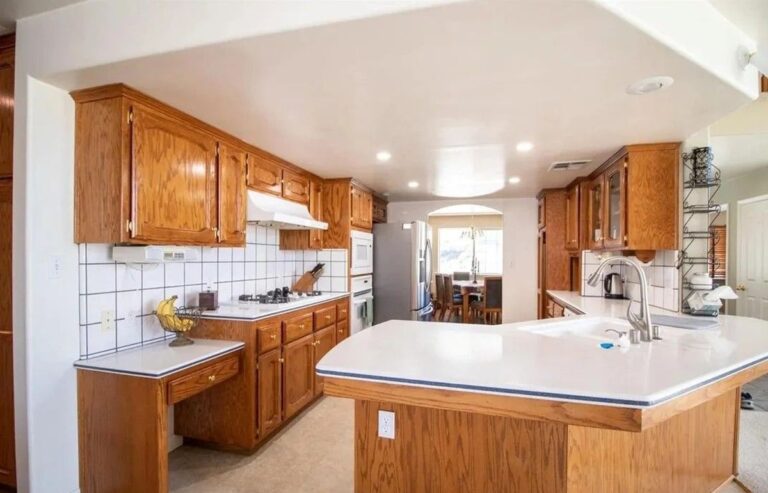
Orange Oak Cabinets Dominated Every Surface

The original kitchen used oak cabinetry across nearly every wall, including the island, upper cabinets, desk area, and appliance surround.
Because the wood tone carried strong orange undertones, the cabinetry absorbed much of the natural light instead of reflecting it back into the room. White square backsplash tile and laminate counters added even more contrast against the oak grain, making the kitchen feel visually fragmented instead of connected.

The oversized soffit above the island also lowered the ceiling line and compressed the center of the room. Even with a large footprint, the kitchen felt darker and heavier than its actual size.
White Cabinet Paint Removed the Heavy Wood Tone

Instead of replacing the cabinetry, the remodel kept the original cabinet structure and painted it white.
That shift immediately changed how the room handled light. The walls stopped reading as one continuous block of oak, and the kitchen started feeling wider and calmer from every angle.
The raised-panel cabinet doors still kept traditional detailing, but the white finish softened the visual depth that previously made the cabinetry feel bulky. Brass hardware also introduced warmer contrast without pulling the room back into darker tones.
The Sage Green Tile Changed the Entire Back Wall

One of the strongest changes came from the backsplash.
The original white grid tile felt flat and heavily builder-grade. After the renovation, vertically stacked sage green tile introduced movement, reflection, and softer color variation behind the counters.

Because the tile runs continuously across the walls without decorative inserts or accent strips, the backsplash now feels architectural instead of decorative. The glossy finish also reflects under-cabinet and ceiling light across the kitchen instead of absorbing it.
The muted green tone keeps the space warm while preventing the white cabinetry from looking sterile.
Quartz Counters Softened the Layout Around the Island

The original laminate counters used dark edge trim that outlined every surface separately.
After the remodel, white quartz counters created longer uninterrupted planes across the kitchen. The waterfall-style veining remains subtle, which keeps the counters from overpowering the cabinetry or backsplash.

That cleaner surface also changed the island completely. Instead of feeling like a large oak block sitting in the middle of the room, the island now blends into the surrounding cabinetry and allows the eye to move deeper into the space.
The New Flooring Brightened the Entire Kitchen Footprint

The laminate flooring in the original kitchen carried yellow-beige undertones that blended into the oak cabinetry.
Wide-plank white oak engineered flooring completely changed the lower half of the room. The softer wood tone introduced warmth without repeating the heavy orange finish from before.
Because the planks run through both the kitchen and dining area, the renovation also created stronger continuity between spaces. The room now feels longer and more open instead of visually divided into separate zones.
Stainless Steel and Matte Metal Fixtures Sharpened the Kitchen

The updated appliances and fixtures introduced stronger definition against the lighter cabinetry.
A stainless vent hood replaced the older white hood surround, creating a cleaner focal point around the cooking wall. The pot filler also added a more professional kitchen detail without overwhelming the design.
Rather than relying on decorative trim or ornate finishes, the remodel uses metal accents to create contrast through shape and texture.
The Kitchen Feels Taller Even Though the Layout Barely Changed

The renovation never removed the original footprint. Most cabinet locations, wall openings, and work zones stayed almost identical.
But the lighter cabinetry, reflective tile, brighter flooring, and cleaner surfaces changed how the entire room handles height and light. The eye now moves through the kitchen instead of stopping at dark cabinet walls and heavy horizontal breaks.

White cabinet paint, sage tile, and lighter flooring completely reshaped how this kitchen feels. Would you try this approach in your own kitchen?
All images and credits go to Reddit user Not_l0st and are available in the original Reddit thread.